Solar power in crisis: 'My panels generate enough power for two loads of washing'
Endless energy from the sun looked like a long-term solution for running our homes. But now the state has pulled the plug on the subsidies that made panels affordable for many. What happens now?

Sit back, relax, and read this story with an untroubled conscience: it has been created on a laptop and mobile phone powered entirely by the rays of the sun. This feat would surely astound the most idealistic Greek philosopher or Victorian entrepreneur. It would confirm their wildest hopes for humanity’s progress. Perhaps they would be even more amazed that it was possible via a coalition of Chinese companies, British roofers and local councils. Oh, and government support, which is set to be abruptly withdrawn.
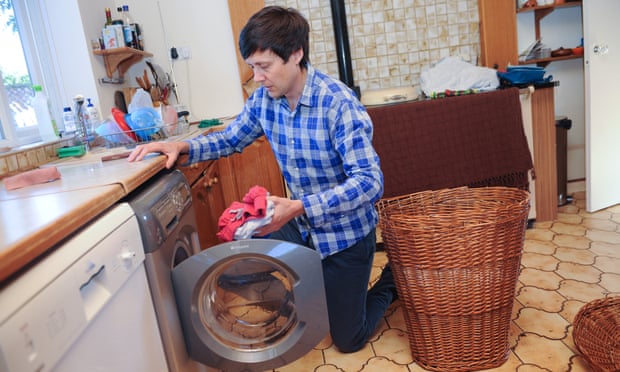
The power comes from 16 black Ja solar panels that were fitted to the roof of my home in August. Together, these panels, each the size of a coffee tabletop, have a capacity of 4kW, enough to meet the energy needs of an average family home. Today, a gloomy autumnal moment, they have generated 4.403kWh. It hardly sounds impressive – it’s enough power for a couple of loads of washing – but collectively it represents a revolution. Solar hasn’t changed my life, but it has shifted my perceptions. A little monitor on my desk tells me how much electricity I am generating. I’m acutely aware of the scarcity of energy, the rarity of unbroken sunshine and changing path of the sun. In August, rays hit my panels at 8.30am and an image of a green finger materialised on my monitor, urging me to switch on appliances. Now it doesn’t appear until 10.30am and so we delay putting on the washing machine. We have toddlers around the house all day, so solar suits us: we time the dishwasher for daylight hours and the TV tends to be on more during the day than at night. If I’m working from home, I charge laptops and phones around midday, too. Solar’s drawback is that most power is generated in daylight hours, when people tend to be at work, and there’s currently no affordable battery technology to store the energy you generate. But that energy is not wasted: it goes into the national grid, and solar owners are paid for what they produce.
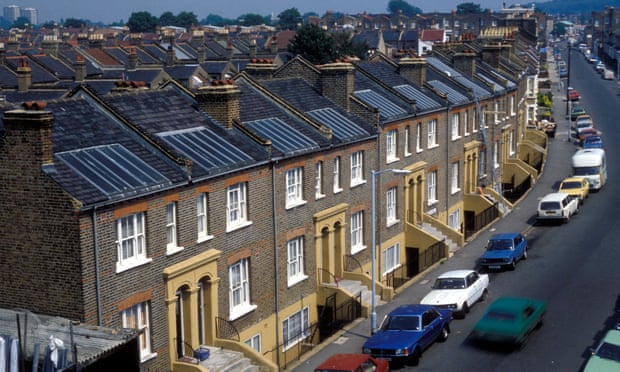
A million British homes now have rooftop solar panels. The thicker panels are solar thermal and heat water. Most, some 750,000 solar PV installations, convert the sun into electricity. Solar produces 1.5% of total UK electricity, up from virtually nothing in 2010. It has proved so popular that the government wants to cut the feed-in tariff, the solar subsidy, by 87%. Since 2010, domestic and commercial solar systems have been paid by the government for every kWh they generate. I receive quarterly payments for the electricity I generate at 12.96p per kWh with another smaller payment for what the authorities estimate I return to the grid. These payments are guaranteed for 20 years. Such has been the popularity of solar that the government says it is spending too much money supporting it: from January, it is proposing to dramatically slash this subsidy for new solar installations. The Solar Trade Association has warned this could cost up to 27,000 jobs; 1,000 are already disappearing with the recent closure of four big renewable companies. Will this solar miracle be shattered? Will rooftop panels soon resemble the relics of a bygone energy age, like the enormous cooling towers of coal-fired power stations?
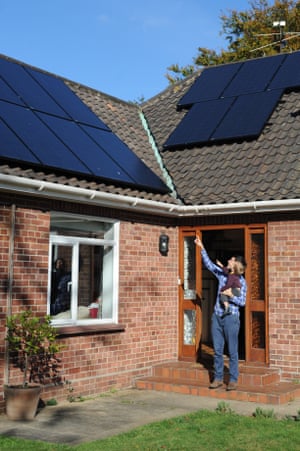
Like many people, I was persuaded to put up solar PV not by promises of a fat cheque from the government but by meeting someone who’d had panels fitted and sung their praises. In 2014, I was researching a story about REPOWERBalcombe, a community energy group created by members of the Sussex village best known for its anti-fracking protests. Tom Parker, a gardener, had panels fitted on his roof five years earlier and then volunteered to help 15 renewable projects in the neighbourhood, including his children’s school. He had watched solar systems over 20 years’ worth of running time – and none had lost a single hour of power generation. “It’s fantastically reliable, much more reliable than the National Grid,” he enthused. “It’s just churning out energy, year after year.”
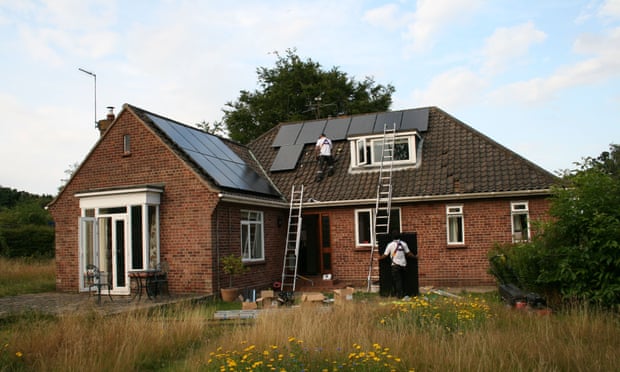
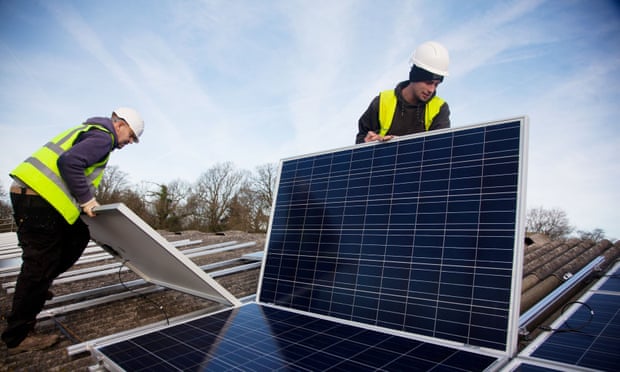
Last year, I moved to a south-facing house and this summer found a good deal for solar PV: my standard 16 panels cost £4,630 to supply and install, which was done in a day in August by an electrician and two roofers who were recent converts to solar employment. Business was brisk: they were supposed to fit two roofs each day. Business is even brisker now. Britain’s solar providers are swamped with work as people rush to get panels installed before the government introduces its planned subsidy cut. After that, with solar still a few years off “grid parity” – where a unit of solar power is as cheap as electricity produced via gas, coal or other fossil fuels – the industry will rapidly burn out. According to the Solar Trade Association, the proposed cuts will leave Britain with an annual solar spend of less than what Buckinghamshire county council is devoting to potholes this year.
I claim I would have fitted the panels without a subsidy because I want to reduce my dependence on fossil fuels; for others, solar PV is a pragmatic investment: at current prices, government subsidies and reduced electricity bills return your £5,000 in about eight years; then the subsidy – and lower bills – keep coming for the 20-year lifespan of the panels. Most experts say the panels will last longer. I have not yet noticed a rapid drop in my electricity bill, but reductions in southern England are estimated at £135 a year. If I was truly principled, perhaps I wouldn’t pocket the subsidy, but a solar meter was installed next to my electricity meter and I registered for the feed-in tariff through my energy provider. When the feed-in tariff began, in 2010, domestic early adopters were paid a whopping 43p per kWh. But they also forked out almost three times as much for their panels. My magic monitor informs me of the sun’s riches each day. My worst day so far – torrential rain – provided just 7p; the last £2 day was a month ago; will I see its like again before spring? Nevertheless, my solar is on track to generate the fitters’ predicted 3,485kW each year, which is more than my household’s annual electricity consumption. If so, the feed-in tariff will pay me £534.77 tax-free, each year.
The solar subsidy currently costs every energy billpayer £9 each year. This is the nub of the case against solar: why should poor billpayers pay for relatively affluent people like me to indulge our “green crap”? The government’s motives for cutting the subsidy were explained more pragmatically by the contractor who measured up for my panels, an old-school property surveyor who had moved into PV. The government looks like it is struggling to meet its legally binding target of renewables providing 15% of UK energy (including heating) by 2020 but such is the dramatic expansion of solar that it doesn’t want to pay millions in subsidies that cause it to exceed this target. So it is sensible to gradually reduce solar subsidy as panel costs fall: people will continue to fit solar and the industry will prosper and eventually be weaned off government support: the Solar Trade Association is begging the government to adopt an “emergency” plan to do just this. It claims it will add just £1 to annual energy bills.
When I call Leo Murray, he’s standing by a fake sun – a 10ft helium balloon filled with LED lights in Ravenscourt Park, London. The campaigns director for 10:10, a charity encouraging positive action on climate change, Murray’s lightbulb-like brightness is dimmed by the government’s desire to slash solar support. Who wouldn’t want to exceed our renewables targets, he wonders, when surveys show that solar is the most popular form of energy, with 80% support: “We explain to the public how we all contribute towards solar – it adds a couple of quid on our bills each year – and we can’t find anyone who is anti-renewable energy.”
Murray believes the government is tackling the success of solar the wrong way round. It allocated a finite sum of money and now that is almost spent, after the quicker-than-forecast uptake of solar panels, it is pulling the plug. “It’s ideologically driven. It’s coming from the Treasury. You see the looks on DECC [Department of Energy & Climate Change] officials’ faces – they don’t want to be doing this. It’s the most successful and popular climate-change policy ever implemented by the UK government – a demand-led energy policy engaging consumers in the transition to a low-energy economy.”
But why should hard-pressed billpayers subsidise expensive solar? “What really gives the lie to that argument is Hinkley [the proposed new nuclear power station]. Even staunch supporters of nuclear don’t think that is a good deal. At £24.5bn, it could be the most expensive object on earth. If you want to keep bills down, don’t do that – it’s definitely going to push bills up.” For Murray, there’s a simple way to ensure wealthy solar investors aren’t subsidised by less affluent billpayers: a solar levy could be progressively applied to bigger electricity bills. (There is a strong correlation between higher bills and higher household wealth, and there could be specific support for exceptions, such as low-income residents of energy-inefficient private rentals.)
Murray and 10:10 will continue to support volunteers in community energy. While media coverage has focused on commercial job losses, the solar cuts will also decimate community energy. Since I met Tom Parker in 2014, REPOWERBalcombe has gone from strength to strength. Funded by local people, Parker and his fellow volunteers have opened an 18kW array on a local farm and two smaller rooftop solar systems for schools. The Conservative-dominated local council this month approved their plans for a 4.8MW array which will meet all the power needs for Balcombe and neighbouring West Hoathly. But Parker is despairing at the government’s punitive approach to solar. “We demonstrated that the community hated the idea of fracking and loved the idea of solar and they are trying to prevent other communities from taking the same approach. It’s almost like we’ve been too successful.”
It’s not simply the subsidy cut: Parker lists eight major regulatory changes that have made it more difficult for community energy groups. These include making it harder for investors to obtain tax relief, changing the rules over the creation of energy co-ops and making renewable projects such as theirs pay a “climate change levy” – even though they are part of the solution, not the problem. “If someone had set out a year ago to say, ‘How can we most damage co-ops?’, I don’t think they could’ve done any more,” says Parker. As Murray puts it: “These people are volunteers, doing their best to get things off the ground and the ground keeps moving underneath them.”
REPOWERBalcombe won’t be able to grow any more, but it’s lucky to have established as many projects as it has, says Parker. Elsewhere, “it’s looking pretty dire for community energy,” admits Murray. “It won’t kill the sector dead but we won’t see any new projects coming forward.” The volunteers running community energy groups normally aspire to expand to a point where they can employ one person to run their project over its 20-year lifespan. The cuts create the prospect of volunteers being forced to manage their groups (committed to paying a return to local people who have invested in them) for 20 years themselves, unable to expand to hand over to a modestly paid professional. “That’s vindictive,” says Murray. “Presumably, it’s not meant to be.”
A botched cut in solar support may damage UK PLC, with investors fleeing such an unstable regulatory environment, as the CBI has argued, but it won’t trouble global trends. Solar currently produces 200 gigawatts around the world. Forecasts suggest this will be 1,000 in 10 years’ time but predictions, admits Ajay Gambhir, senior research fellow at the Grantham Institute, Imperial College London, have been far too pessimistic. Early 21st-century forecasts of a “US$1 per watt” price for solar panels by 2030 were reached in 2011/12. “That is a rapid cost reduction,” says Gambhir. Solar is a modular technology, so manufacturers quickly learn how to refine it when repeatedly making the same component. Chinese manufacturers will reduce costs to 35/40 cents per watt by the decade’s end, predicts Gambhir, confidently. And solar will probably be adopted in developing nations as quickly as the mobile phone in Africa: its modular character is ideal for remote countries with a limited electricity grid.
More exciting than ever-cheaper panels is affordable battery technology, which will solve my problem of generating lots of power at midday when I don’t really need it. Elon Musk of Tesla unveiled its Powerwall domestic battery to great fanfare this spring. In Britain, Powervault is selling dishwasher-sized rechargeable battery units for domestic solar for £2,800. “There’s been a lot of interest from early adopters who’d like to use more of the solar energy they generate,” says Joe Warren, managing director of Powervault. He predicts that prices could fall to £1,000 by 2020 with 50,000 UK households buying batteries.
It is not just makers who are talking up batteries. As Gambhir explains, increasing the amount of electricity storage has huge value to the National Grid because it helps balance variable supply and erratic demand (we all switch on the kettles during the World Cup final half-time). It also reduces the requirement to have big gas or coal power plants standing by to backup renewables. (Incredibly, the British government recently approved the creation of backup power stations run by diesel generators.) Batteries will also help the grid adjust to the big new challenge posed by the need to charge electric vehicles. Given these services, shouldn’t solar batteries be subsidised? “I don’t know if it’s being considered politically but from an economics of innovation perspective it makes inherent sense,” says Gambhir.
Grid parity – when solar is as cheap as gas or coal – is coming. Parity between solar and the retail price for grid electricity has already been reached in Mexico and even Germany. It will arrive in Britain in about four years, but most analysts believe that British solar won’t reach genuine parity with gas or coal (being as cheap to set up a big power station) for a decade. This will be too late to save Britain’s solar industry, if the cuts come. “Solar will get there and private money will eventually fill the gap, but it may not get there nearly as fast [without government support] and there will be more bankruptcies on the way,” says Gambhir. Murray is close to despair. To abandon solar at this moment “doesn’t make business sense and it’s terrible for the environment. The whole thing is a mess. The rest of the world is looking at us and thinking: ‘What are they doing?’”
Source by: http://www.theguardian.com/environment/2015/oct/20/solar-power-in-crisis-panels-generate-power-government-subsidy