Showing posts with label Renewable energy. Show all posts

Thursday, October 22, 2015

Solar power subsidies cut might save just 50p on average electricity bill


Industry executives say latest government attack on renewable energy will take UK ‘back to the dark ages’, hitting jobs and investment

The government has unveiled plans to slash subsidies to solar power projects in an attempt to drive down annual household electricity bills, but later admitted it might save customers just 50p a year.

Industry executives warned the latest attack on renewables would take Britain “back to the dark ages”, hitting jobs and investment while damaging David Cameron’s credibility on tackling climate change.

Ministers have targeted larger solar installations of less than 5 megawatts – enough to power 2,500 homes – in a consultation on the early closure of the renewable obligation (RO) subsidy in April 2016.

The government also announced a review of another subsidy, the feed-in tariff, to make further significant savings in a move that could threaten state support for solar panels on roof tops.

In addition, ministers are to remove the guaranteed level of subsidy for coal or other fossil fuel power plants that switch to greener fuels such as biomass – generated by burning plants or wood pellets. The government says the move could save £500m a year from 2020 onwards.

Amber Rudd, the energy and climate change secretary, said the aim overall was to bring costs under control and she denied it would chase away investment.

She added: “My priorities are clear. We need to keep bills as low as possible for hardworking families and businesses while reducing our emissions in the most cost-effective way.

“Our support has driven down the cost of renewable energy significantly. As costs continue to fall it becomes easier for parts of the renewables industry to survive without subsidies. We’re taking action to protect consumers, whilst protecting existing investment.”

The government said its initial objective was to reduce a £1.5bn cost overrun in the amount of subsidies being paid to the renewable energy sector by 2020/21 but indicated that more measures would follow to slash costs.

The cost overrun, it admitted, had been caused by a variety of factors including low power prices and larger than expected investment in solar and other “green energy” projects. But the planned cuts to subsidies for solar would only net between £40m and £100m by 2020, the equivalent of 50p to £1.20 a year off the average electricity bill, according to government background documents.

The attack on solar follows government attempts to end onshore wind subsidies and speculation that widespread cuts of energy efficiency subsidies will come later this year.

Michael Grubb, professor of international energy and climate change policy at University College London, said the announcement was a pivotal moment in UK energy policy that gave the impression of two different governments running the country’s energy policy.

“One is ... pressing for strong international action on climate change, which signed an unambiguous cross-party pledge to phase out unabated coal, reiterated its carbon targets and which committed in its manifesto to deliver clean renewable energy as cost-effectively as possible.

“The other is a government which has moved to prematurely end supports for the cheapest of the UK’s main renewable resources, which has injected fear and uncertainty into renewable energy investors and which seems set to also scrap energy efficiency programmes which have helped to cut consumer bills and avoided the need for billions of pounds of new fossil fuel investments.”

Richard Kirkman, technical director of environmental services group Veolia UK expressed grave concern about the government plans, saying: “We appear to be entering another dark age where we will return to total fossil fuel reliance, power cuts, low confidence in UK investment, opening the door for fracking activities to maintain energy security.”

Lord Oxburgh, a former chairman of the Shell, said ministers should remember the example of the North Sea oil industry, which took consistent Treasury aid to get off the ground.

“If we’re serious about building a new, clean energy industry in the UK, including our unique offshore wind resource in the North Sea, that also needs stable, long-term support from government,” he said.

Angus MacNeil MP, the SNP chair of the energy and climate change committee, said the proposals would evade scrutiny because they had been unveiled during the parliamentary recess.

Rudd had hinted at her stance on renewable energy subsidies at a meeting of MacNeil’s committee on Tuesday. She argued onshore wind farms could be built in Britain without any kind of financial aid.

Source by: http://www.theguardian.com/environment/2015/jul/22/solar-power-subsidies-to-be-cut-under-plans-to-reduce-green-energy-costs

Wednesday, October 21, 2015

Solar power in crisis: 'My panels generate enough power for two loads of washing'


Endless energy from the sun looked like a long-term solution for running our homes. But now the state has pulled the plug on the subsidies that made panels affordable for many. What happens now?

Sit back, relax, and read this story with an untroubled conscience: it has been created on a laptop and mobile phone powered entirely by the rays of the sun. This feat would surely astound the most idealistic Greek philosopher or Victorian entrepreneur. It would confirm their wildest hopes for humanity’s progress. Perhaps they would be even more amazed that it was possible via a coalition of Chinese companies, British roofers and local councils. Oh, and government support, which is set to be abruptly withdrawn.

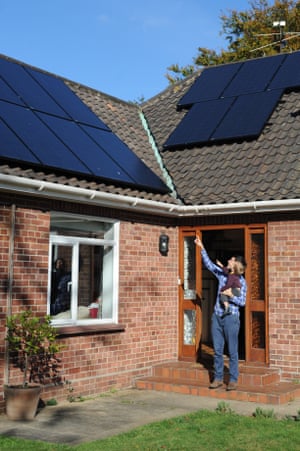
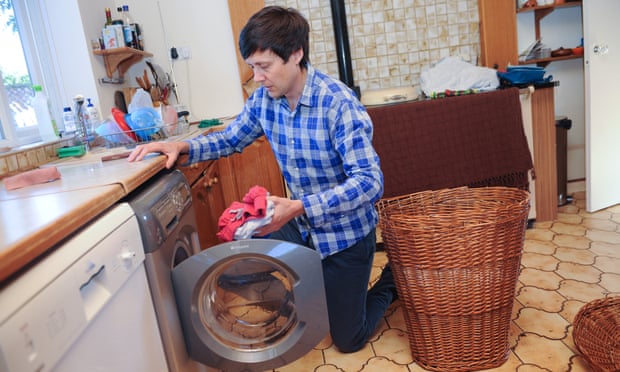
The power comes from 16 black Ja solar panels that were fitted to the roof of my home in August. Together, these panels, each the size of a coffee tabletop, have a capacity of 4kW, enough to meet the energy needs of an average family home. Today, a gloomy autumnal moment, they have generated 4.403kWh. It hardly sounds impressive – it’s enough power for a couple of loads of washing – but collectively it represents a revolution. Solar hasn’t changed my life, but it has shifted my perceptions. A little monitor on my desk tells me how much electricity I am generating. I’m acutely aware of the scarcity of energy, the rarity of unbroken sunshine and changing path of the sun. In August, rays hit my panels at 8.30am and an image of a green finger materialised on my monitor, urging me to switch on appliances. Now it doesn’t appear until 10.30am and so we delay putting on the washing machine. We have toddlers around the house all day, so solar suits us: we time the dishwasher for daylight hours and the TV tends to be on more during the day than at night. If I’m working from home, I charge laptops and phones around midday, too. Solar’s drawback is that most power is generated in daylight hours, when people tend to be at work, and there’s currently no affordable battery technology to store the energy you generate. But that energy is not wasted: it goes into the national grid, and solar owners are paid for what they produce.

A million British homes now have rooftop solar panels. The thicker panels are solar thermal and heat water. Most, some 750,000 solar PV installations, convert the sun into electricity. Solar produces 1.5% of total UK electricity, up from virtually nothing in 2010. It has proved so popular that the government wants to cut the feed-in tariff, the solar subsidy, by 87%. Since 2010, domestic and commercial solar systems have been paid by the government for every kWh they generate. I receive quarterly payments for the electricity I generate at 12.96p per kWh with another smaller payment for what the authorities estimate I return to the grid. These payments are guaranteed for 20 years. Such has been the popularity of solar that the government says it is spending too much money supporting it: from January, it is proposing to dramatically slash this subsidy for new solar installations. The Solar Trade Association has warned this could cost up to 27,000 jobs; 1,000 are already disappearing with the recent closure of four big renewable companies. Will this solar miracle be shattered? Will rooftop panels soon resemble the relics of a bygone energy age, like the enormous cooling towers of coal-fired power stations?

Like many people, I was persuaded to put up solar PV not by promises of a fat cheque from the government but by meeting someone who’d had panels fitted and sung their praises. In 2014, I was researching a story about REPOWERBalcombe, a community energy group created by members of the Sussex village best known for its anti-fracking protests. Tom Parker, a gardener, had panels fitted on his roof five years earlier and then volunteered to help 15 renewable projects in the neighbourhood, including his children’s school. He had watched solar systems over 20 years’ worth of running time – and none had lost a single hour of power generation. “It’s fantastically reliable, much more reliable than the National Grid,” he enthused. “It’s just churning out energy, year after year.”

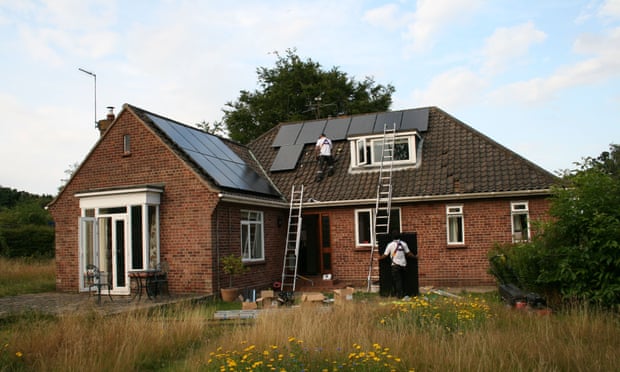
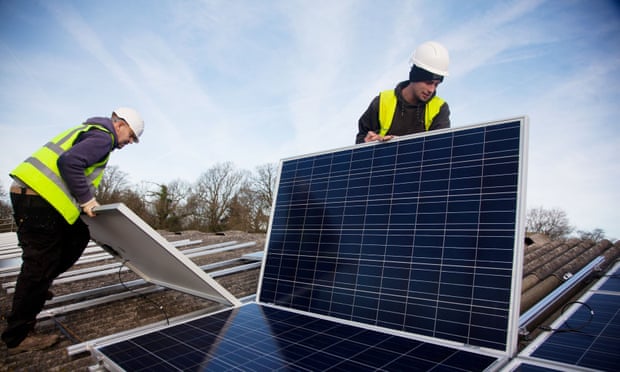
Last year, I moved to a south-facing house and this summer found a good deal for solar PV: my standard 16 panels cost £4,630 to supply and install, which was done in a day in August by an electrician and two roofers who were recent converts to solar employment. Business was brisk: they were supposed to fit two roofs each day. Business is even brisker now. Britain’s solar providers are swamped with work as people rush to get panels installed before the government introduces its planned subsidy cut. After that, with solar still a few years off “grid parity” – where a unit of solar power is as cheap as electricity produced via gas, coal or other fossil fuels – the industry will rapidly burn out. According to the Solar Trade Association, the proposed cuts will leave Britain with an annual solar spend of less than what Buckinghamshire county council is devoting to potholes this year.

I claim I would have fitted the panels without a subsidy because I want to reduce my dependence on fossil fuels; for others, solar PV is a pragmatic investment: at current prices, government subsidies and reduced electricity bills return your £5,000 in about eight years; then the subsidy – and lower bills – keep coming for the 20-year lifespan of the panels. Most experts say the panels will last longer. I have not yet noticed a rapid drop in my electricity bill, but reductions in southern England are estimated at £135 a year. If I was truly principled, perhaps I wouldn’t pocket the subsidy, but a solar meter was installed next to my electricity meter and I registered for the feed-in tariff through my energy provider. When the feed-in tariff began, in 2010, domestic early adopters were paid a whopping 43p per kWh. But they also forked out almost three times as much for their panels. My magic monitor informs me of the sun’s riches each day. My worst day so far – torrential rain – provided just 7p; the last £2 day was a month ago; will I see its like again before spring? Nevertheless, my solar is on track to generate the fitters’ predicted 3,485kW each year, which is more than my household’s annual electricity consumption. If so, the feed-in tariff will pay me £534.77 tax-free, each year.

The solar subsidy currently costs every energy billpayer £9 each year. This is the nub of the case against solar: why should poor billpayers pay for relatively affluent people like me to indulge our “green crap”? The government’s motives for cutting the subsidy were explained more pragmatically by the contractor who measured up for my panels, an old-school property surveyor who had moved into PV. The government looks like it is struggling to meet its legally binding target of renewables providing 15% of UK energy (including heating) by 2020 but such is the dramatic expansion of solar that it doesn’t want to pay millions in subsidies that cause it to exceed this target. So it is sensible to gradually reduce solar subsidy as panel costs fall: people will continue to fit solar and the industry will prosper and eventually be weaned off government support: the Solar Trade Association is begging the government to adopt an “emergency” plan to do just this. It claims it will add just £1 to annual energy bills.

When I call Leo Murray, he’s standing by a fake sun – a 10ft helium balloon filled with LED lights in Ravenscourt Park, London. The campaigns director for 10:10, a charity encouraging positive action on climate change, Murray’s lightbulb-like brightness is dimmed by the government’s desire to slash solar support. Who wouldn’t want to exceed our renewables targets, he wonders, when surveys show that solar is the most popular form of energy, with 80% support: “We explain to the public how we all contribute towards solar – it adds a couple of quid on our bills each year – and we can’t find anyone who is anti-renewable energy.”

Murray believes the government is tackling the success of solar the wrong way round. It allocated a finite sum of money and now that is almost spent, after the quicker-than-forecast uptake of solar panels, it is pulling the plug. “It’s ideologically driven. It’s coming from the Treasury. You see the looks on DECC [Department of Energy & Climate Change] officials’ faces – they don’t want to be doing this. It’s the most successful and popular climate-change policy ever implemented by the UK government – a demand-led energy policy engaging consumers in the transition to a low-energy economy.”

But why should hard-pressed billpayers subsidise expensive solar? “What really gives the lie to that argument is Hinkley [the proposed new nuclear power station]. Even staunch supporters of nuclear don’t think that is a good deal. At £24.5bn, it could be the most expensive object on earth. If you want to keep bills down, don’t do that – it’s definitely going to push bills up.” For Murray, there’s a simple way to ensure wealthy solar investors aren’t subsidised by less affluent billpayers: a solar levy could be progressively applied to bigger electricity bills. (There is a strong correlation between higher bills and higher household wealth, and there could be specific support for exceptions, such as low-income residents of energy-inefficient private rentals.)

Murray and 10:10 will continue to support volunteers in community energy. While media coverage has focused on commercial job losses, the solar cuts will also decimate community energy. Since I met Tom Parker in 2014, REPOWERBalcombe has gone from strength to strength. Funded by local people, Parker and his fellow volunteers have opened an 18kW array on a local farm and two smaller rooftop solar systems for schools. The Conservative-dominated local council this month approved their plans for a 4.8MW array which will meet all the power needs for Balcombe and neighbouring West Hoathly. But Parker is despairing at the government’s punitive approach to solar. “We demonstrated that the community hated the idea of fracking and loved the idea of solar and they are trying to prevent other communities from taking the same approach. It’s almost like we’ve been too successful.”

It’s not simply the subsidy cut: Parker lists eight major regulatory changes that have made it more difficult for community energy groups. These include making it harder for investors to obtain tax relief, changing the rules over the creation of energy co-ops and making renewable projects such as theirs pay a “climate change levy” – even though they are part of the solution, not the problem. “If someone had set out a year ago to say, ‘How can we most damage co-ops?’, I don’t think they could’ve done any more,” says Parker. As Murray puts it: “These people are volunteers, doing their best to get things off the ground and the ground keeps moving underneath them.”

REPOWERBalcombe won’t be able to grow any more, but it’s lucky to have established as many projects as it has, says Parker. Elsewhere, “it’s looking pretty dire for community energy,” admits Murray. “It won’t kill the sector dead but we won’t see any new projects coming forward.” The volunteers running community energy groups normally aspire to expand to a point where they can employ one person to run their project over its 20-year lifespan. The cuts create the prospect of volunteers being forced to manage their groups (committed to paying a return to local people who have invested in them) for 20 years themselves, unable to expand to hand over to a modestly paid professional. “That’s vindictive,” says Murray. “Presumably, it’s not meant to be.”

A botched cut in solar support may damage UK PLC, with investors fleeing such an unstable regulatory environment, as the CBI has argued, but it won’t trouble global trends. Solar currently produces 200 gigawatts around the world. Forecasts suggest this will be 1,000 in 10 years’ time but predictions, admits Ajay Gambhir, senior research fellow at the Grantham Institute, Imperial College London, have been far too pessimistic. Early 21st-century forecasts of a “US$1 per watt” price for solar panels by 2030 were reached in 2011/12. “That is a rapid cost reduction,” says Gambhir. Solar is a modular technology, so manufacturers quickly learn how to refine it when repeatedly making the same component. Chinese manufacturers will reduce costs to 35/40 cents per watt by the decade’s end, predicts Gambhir, confidently. And solar will probably be adopted in developing nations as quickly as the mobile phone in Africa: its modular character is ideal for remote countries with a limited electricity grid.

More exciting than ever-cheaper panels is affordable battery technology, which will solve my problem of generating lots of power at midday when I don’t really need it. Elon Musk of Tesla unveiled its Powerwall domestic battery to great fanfare this spring. In Britain, Powervault is selling dishwasher-sized rechargeable battery units for domestic solar for £2,800. “There’s been a lot of interest from early adopters who’d like to use more of the solar energy they generate,” says Joe Warren, managing director of Powervault. He predicts that prices could fall to £1,000 by 2020 with 50,000 UK households buying batteries.

It is not just makers who are talking up batteries. As Gambhir explains, increasing the amount of electricity storage has huge value to the National Grid because it helps balance variable supply and erratic demand (we all switch on the kettles during the World Cup final half-time). It also reduces the requirement to have big gas or coal power plants standing by to backup renewables. (Incredibly, the British government recently approved the creation of backup power stations run by diesel generators.) Batteries will also help the grid adjust to the big new challenge posed by the need to charge electric vehicles. Given these services, shouldn’t solar batteries be subsidised? “I don’t know if it’s being considered politically but from an economics of innovation perspective it makes inherent sense,” says Gambhir.

Grid parity – when solar is as cheap as gas or coal – is coming. Parity between solar and the retail price for grid electricity has already been reached in Mexico and even Germany. It will arrive in Britain in about four years, but most analysts believe that British solar won’t reach genuine parity with gas or coal (being as cheap to set up a big power station) for a decade. This will be too late to save Britain’s solar industry, if the cuts come. “Solar will get there and private money will eventually fill the gap, but it may not get there nearly as fast [without government support] and there will be more bankruptcies on the way,” says Gambhir. Murray is close to despair. To abandon solar at this moment “doesn’t make business sense and it’s terrible for the environment. The whole thing is a mess. The rest of the world is looking at us and thinking: ‘What are they doing?’”

Source by: http://www.theguardian.com/environment/2015/oct/20/solar-power-in-crisis-panels-generate-power-government-subsidy

Sunday, October 18, 2015

Making Solar Panels
More Efficient


A team of researchers at Massachusetts Institute of Technology has come up with a new way to capture solar energy that makes it easier to store and be used on demand at a later time.

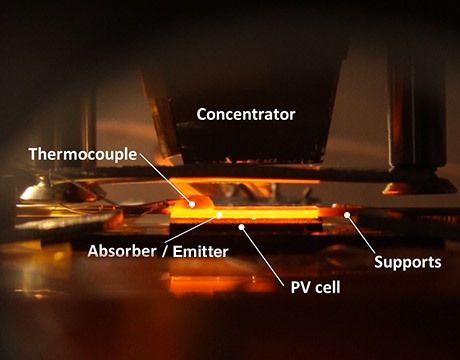
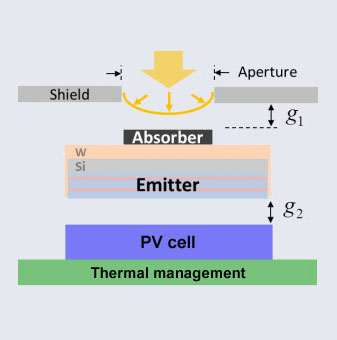
The team created a device that improves the efficiency of solar panels by using wavelengths of light that normally are wasted because they cannot be captured by conventional photovoltaic cells. In this new system, the sun heats a high-temperature material, a two-layer absorber-emitter device placed over the PV cells. The outer sunlight-facing layer, the absorber, includes an array of multi-walled carbon nanotubes that efficiently absorbs the light’s energy and turns it into heat. A bonded layer of silicon/silicon dioxide photonic crystals, the emitter, is engineered to convert the heat back into light that can then be captured by the PV cells. This allows much more of the energy in the sunlight to be turned into electricity.

This new system combines the advantages of solar photovoltaic systems, which turn sunlight directly into electricity, and solar thermal systems, beneficial for delayed use because heat is more easily stored than electricity. The basic concept has been explored for several years, according to the team.

Earlier Studies

A lot of work has been done on the theoretical design of surfaces for solar thermophotovoltaic systems (STPVs) and fabrication of single components for potential integration in these systems, says team member Andrej Lenert, an MIT graduate student who expects to be awarded his PhD in mechanical engineering this spring.

Lenert has been involved with STPV efforts at MIT ever since the university opened the Solid-State Solar Thermal Energy Conversion (S3TEC) Center in 2010, but his interest goes back even further to a radiation class. “I was drawn to this work initially because of the elegance of the concept and later because of the multi-disciplinary nature of its practical implementation,” he says. “My interest in renewable power generation stems as far back as my interest in pursuing an engineering degree.” He expects to continue research in this area after graduation.

While the earlier studies have suggested efficiencies as high as 40%, experiments remained below 1%, Lenert says. “The large discrepancy is in part due to the challenging experimental nature of spectral engineering at high temperatures. It is also in part due to fact that the overall system efficiency is highly dependent on the performance of each one of the energy conversion steps and components, just like in a conventional solar cell, except with the added spectral conversion steps in the hot absorber-emitter.”

He says the team came up with the idea for the absorber-emitter after developing a framework to identify which parts of the spectrum are most critical to the success of an STPV system. “We then tuned the spectral properties of the absorber-emitter using carbon nanotubes and silicon/silicon dioxide photonic crystals to target these properties and achieve the improved performance,” he says.

Key to the breakthrough was an understanding of the interplay between the use of structure at small scales to tune spectral properties and macroscale device design.

Lenert’s team has produced an initial test device with a measured efficiency of 3.2%, and they say with further work they expect to be able to reach 20% efficiency, enough for a commercially viable product.

Further Optimization

In their experiments using simulated sunlight, the researchers found peak efficiency came when the intensity was equivalent to a focusing system that concentrates sunlight by a factor of 750. This level of concentration is already much lower than in previous attempts at STPV systems, which concentrated sunlight by a factor of several thousand. But the MIT researchers say that after further optimization, it should be possible to get the same kind of enhancement at even lower sunlight concentrations, making the systems easier to operate.

Lenert says this is because the research center is currently working on getting even better control of the thermally-driven spectral conversion process using wavelength and angular selective surfaces. “This selectivity will lower the required level of solar concentration in two ways: Control over re-emission losses from the absorber and a more efficient TPV process that will contribute to lowering the input solar power needed to reach the same operating temperature.”

If the team achieves its goal of generating power from sunlight both efficiently and on demand from an STPV system, it could have a major impact on the way society uses solar power or at least provide another renewable option for applications when solar thermal plants or photovoltaics cannot meet the requirements, Lenert says.

Source by;https://www.asme.org/engineering-topics/articles/renewable-energy/making-solar-panels-more-efficient

Saturday, October 17, 2015

UK-assembled PV-heat batteries set out to ‘prove real impact on fuel poverty’


Sunamp, a Scottish manufacturer of heat batteries for domestic energy storage, including models designed to link with PV systems, has started serial production of its units from a base in the UK.

Company boss Andrew Bissell and his team revealed at the Solar Energy UK show yesterday that Sunamp’s assembly partner, Bay Solutions, is putting together Sunamp products at a rate of 100 cells a week, equating to 50 units.

While the company undoubtedly wants to go for the wider commercial market long term, the initial focus of this output will be for a community-run and privately-invested programme to assess the long-term impact on fuel poverty of using the heat storage in combination with PV on the roofs of at least 1,000 social housing developments.

After initial production began about a month ago, Bissell said, the output from Bay Solutions is at 250kWh weekly, with each heat cell holding 2.5kWh of thermal energy and each battery unit of two cells holding 5kWh. Bay Solutions had until now been making electronics boards for the batteries’ control systems but now taken on the role of producing the finished “white box” product.

The initial line of batteries will be the Sunamp PV model. As might be expected from the name, these are intended for self-consumption of PV by households. The cells use Phase Change Materials that melt and release heat when needed – melting at around 58 degrees centigrade. Sunamp claims that in contrast to a normal domestic PV system, which exports a large portion of its generated power, the heat battery allows the system user to consume as much as 80% of the PV power as converted heat energy.

Bissell has long been vocal in pointing out that in Britain, more energy is expended “in the thermal domain” as in the electrical, and claims the devices, which also work to make already installed combi boilers more efficient, can save a household up to £271 a year over the 20 year life of the PV system.

While some companies are keeping their cards close to their chests and reluctant to reveal prices ahead of full-scale launch in the UK, Sunamp has quoted prices of around £1,700 per 5kWh system – although prices exclude VAT, due to the variable rate of the tax according to whether the property it is going into is new build (0% rate), an energy efficient property (5% rate) or otherwise (20% full VAT rate). As a benchmark, Tesla’s Powerwall electrical storage battery will be sold to installers at US$3,500 (£2,270) for a 10kWh system.

Chinese investor-backed social housing trial


The first units to roll off the production line will be used in the Eastheat, programme to “prove the real impact on fuel poverty” of combining PV and energy storage in the Edinburgh region. It will be part funded by the Scottish government through the Local Energy Challenge Fund, put together by Scottish community renewable energy advisory group Local Energy Scotland.

Sunamp has partnered with two housing associations, East Lothian Housing Association and Castle Rock Edinvar. There are four other consortia in the Eastheat programme, with Sunamp and the others winning the projects through a competitive process against over 100 other candidates.

Interestingly, the project was developed before the proposal of drastic feed-in tariff (FiT) cuts in the UK. As a result of the announced cuts, the plan has been revised to maximise the number of installations from an initially planned 1,000 rooftop PV systems and 650 Sunamp heat batteries. An estimated 3,000 PV installations will be carried out instead by Eastheat’s installation partner Edison Energy. “…Due to the planned changes to the feed-in tariff the challenge was accepted to maximise the installations within the housing association properties wherever it was feasible,” Bissell told Solar Power Portal.

As the programme was enlarged, Bissell said, a Chinese investor – which Edison Energy preferred not to name at this stage – stepped in with a £10 million contribution to the project’s costs. This could also mean a ramping up of the expected 650 Sunamp system deployments.

Bissell said he personally did not know any further details of the Chinese investor.

However, he said that it was "obviously...a big investment and obviously the feed-in tariff for PV is key to it happening".

source by: http://www.solarpowerportal.co.uk/news/uk_assembled_pv_heat_batteries_in_project_to_prove_real_impact_on_fuel_pove

Friday, October 16, 2015

The rush for solar power: buy now, before it's too late


This has been a bumper year for solar energy in the UK, and polls show it has become our favourite kind of power. But with drastic cuts threatened, is the industry racing off the edge of a cliff?

“The biggest challenge was the grid connection,” says Donna Clarke with satisfaction. Clarke has worked in renewables for 15 years, and developed the UK’s only biodiesel plant before moving into solar energy. When the company she now works for, Scottow Moor Solar, arrived at RAF Coltishall in May last year, there was no means to plug the 50MW (megawatts) of power they thought could be generated on the former airfield – enough to run 15,000 homes – into the electricity supply.

Nearly 18 months later, with phase one of East Anglia’s biggest solar farm completed on schedule in March, and a second phase planned, there are not one, but two connections to carry 33MW of power. One 7MW connection was bought from a developer whose planning application for two wind turbines had been refused following local objections.

Negotiating a route for the other 26MW was more complicated, as the local grid was at full capacity, but Scottow Moor founder David Fyffe managed to persuade UK Power Networks (UKPN) to support a pilot, flexible-connection scheme, meaning the power can be turned down or “curtailed” when not needed. Phase two of the project will require a third connection for a further 20MW of power – bringing the total output to 50MW, making Scottow Moor one of the UK’s biggest solar farms.

When I visited the site last month, there was a palpable sense of relief. Decommissioned military bases, with their poor infrastructure and decrepit buildings, are notoriously awkward to develop. But here in Norfolk, Scottow Moor’s backers think they’ve hit on a winning scheme – and in the nick of time.

As the second phase of the Guardian’s Keep It in the Ground campaign has highlighted, solar power has gone through a remarkable period of growth since the demoralising Copenhagen climate summit in 2009: in the intervening six years, the cost of panels has fallen by 70%, with the government’s target of 750,000 domestic solar installations by 2020 reached this year. Following her promotion in May, energy secretary Amber Rudd promised to “unleash a new solar revolution”, singling out commercial rooftop developments, still a relative rarity in the UK, and perhaps thinking too of her Hastings constituents with their sun-kissed, southern roofs. But just three months later, she was announcing drastic cuts. In the next few weeks, Rudd, who used to work under chancellor George Osborne in the Treasury, will decide whether or not to reduce by almost 90% the feed-in tariff that subsidises small-scale solar installations, such as household roofs, from 1 January 2016. A consultation closes next week.

For those considering installing solar panels, the race is already on. In the weeks since Rudd’s about-turn, several companies have already gone bust.

“The rush is there. We are seeing it at many levels – large and small-scale, commercial rooftop, schools and residential,” says Reza Shaybani, chairman of the British Photovoltaic Association (BPVA). “I’m taking calls from members saying they will be doing the equivalent of eight months’ installations in the next three months, and as you can imagine, that will have an impact on safety and quality. No matter who you are, if you rush, you cut corners.”
At Scottow Moor, the challenge was to get hold of and install 133,560 panels by the end of March to ensure that the project qualified for ROCs (Renewable Obligation Certificates). ROCs were one of the government’s ways of subsidising renewable energy projects greater than 5MW, until they were withdrawn from new, ground-mounted solar farms this year. The £30m project was completed in seven weeks, using 20 contractors, including three different suppliers of panels because one company could not make them quickly enough. Project manager Gareth Hawkins calls Scottow Moor “the fastest per-MW build in Europe”.

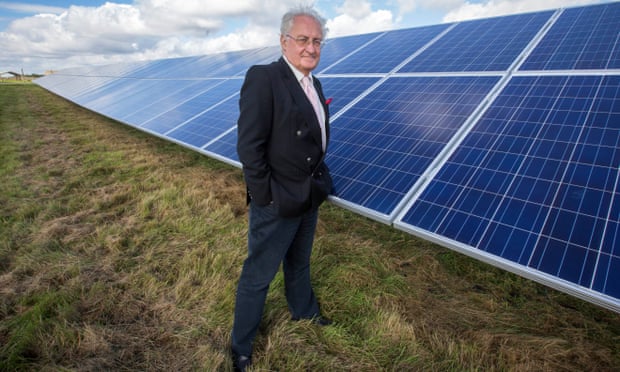
The 600-acre site, which is a conservation area covered in listed buildings with a prison for sex offenders at one edge, is owned by Norfolk county council, and when I visited council leader George Nobbs was on hand to celebrate. With his white hair, pink tie and a red handkerchief in his top pocket, Nobbs cuts a genial and jaunty figure.

“We’re one big happy family,” he says of Labour’s alliance with Liberal Democrats and Ukip, which ensures Labour and not the Conservatives leads the council, with support from the Greens. It was a Lib Dem, John Timewell, who suggested a solar farm in the first place, Nobbs says, and planning permission was granted by two Conservative-run district councils. After our interview, Nobbs gamely agrees to try to catch up with the sheep grazing under the panels for the Guardian’s photographer, so we can show how, on this flat patch of Norfolk, solar and livestock coexist (but sadly the sheep run away).
Coltishall was bought for £4m under the previous council administration three years ago, and the deal with Scottow Moor Solar means Nobbs has now made this money back. Now he and his colleagues have to attract businesses to the empty offices and aircraft hangars that have been rebranded Scottow Enterprise Park, but have so far escaped the attention of satnav: the taxi driver who took me there could find no trace of street name or postcode.

Everyone seems very pleased that TV company October Films has moved in, and plans to make a programme involving fast cars on the runway once used by Hurricanes and Spitfires and saved for reasons of nostalgia (the local village is called Badersfield, after fighter pilot Douglas Bader, who was briefly based here). More recently, says Hawkins, one of Scottow Moor’s investors used it to land a helicopter.

Whether plans to regenerate the area economically will succeed remains to be seen. There have been complications: Scottow Moor Solar has already spent more than £350,000 having the site swept for ammunition. The council would like the park to become a hub for green businesses, and phase two of the solar farm will provide electricity to the four aircraft hangars it hopes to let. But if the story so far is one of success – of co-operation between the public and private sectors; of a local farmer working with developers (the grazing arrangements don’t work with cows or horses that are too heavy and can damage equipment, so it’s sheep or nothing); of cross-party co-operation and a community with strong feelings about its military heritage brought on side through consultation – both the politicians and developers who made it happen fear there won’t be many more like it.

Partly because of the March cut-off for some subsidies, 2015 has been a bumper year for solar. Britain added more capacity last year than any other European country, and July set a new record, when on one glorious summer’s day 16% of all UK electricity was sun-powered – with around half coming from domestic rooftops, the rest from solar farms. In the same month Greg Barker, energy minister until he stood down from parliament in May, was named president of the British Photovoltaic Association (BPVA). In September, a poll for ICM found solar the most popular form of energy among voters of all parties – with 30% naming it their favourite, compared with 15% for nuclear and 13% for gas – and 78% saying the government should do more to help communities generate their own power. Solar was on a roll.

But the recent change in government policy has cast a sudden shadow. Even if the government rows back on the extreme cuts proposed, as some of its own MPs would like it to, there is no doubt subsidies will shrink, and an industry set to deliver 1GW of new solar per year will have to scale back – with domestic and small-scale rooftop installations the most obvious victims, even though policy has been to support these in preference to ground-mounted solar on agricultural land.

In the meantime, those companies that can are doing their best to make hay while the sun shines. Shaybani says the industry was prepared for a shock; orders were placed in advance and as a result, there is no shortage of modules right now. But a binge, he says, is the last thing the industry needs – especially when this looks set to be followed by a period of starvation.

Since the subsidy cuts are in the cause of saving money – higher-than-expected demand for solar having led to overspending of the budget – he argues that by stimulating a run on solar panels, the government is making things worse. While he likens previous changes in the subsidy regime to bumps in the road, the industry is now, he says, at “the edge of a cliff”.

“The redundancies we have seen are the tip of the iceberg,” he continues. “In any business, if your number of customers is limited you don’t need a big team.”

Sonia Dunlop, spokesperson for the Solar Trade Association, agrees. “The industry already had a plan to wean itself off subsidies between 2020 and 2025,” she says, “but the caveat was that we needed a stable policy framework to get us there. It’s about energy independence and investment in cheaper energy over 20-30 years. For most people it’s definitely not a green thing.”

Back in Norfolk, Clarke and Hawkins are getting stuck into phase 2 of Scottow Moor Solar’s farm. Around 43,000 more ground-mounted panels will be here by next spring, with work beginning in December.

“Speed creates challenges, especially when there are complex issues to deal with around the grid,” says Clarke, “but we think our experience means this time round there will be few surprises. Obviously, the uncertainty around policy is not helpful. But this is a project that was always going to be completed. There is a need on site for this electricity supply, and locally it’s got a lot of support.” How many similar projects will get off the ground and whether, if they do, smaller rooftop solar will be squeezed out, remains to be seen.

Source by:http://www.theguardian.com/environment/2015/oct/16/solar-power-race-is-on-renewable-energy
Wednesday, October 14, 2015

University of Kansas architecture students take solar construction into the future

October 14, 2015 Kathie Zipp

Powering old homes with solar is only half the renewable-energy equation.

Designing and building new homes that make the most of that renewable power – achieving ultra-efficient “Net Zero” construction, and beyond – is the next frontier for sustainable living.

Graduate students in the University of Kansas Department of Architecture, Design and Planning are pushing construction into the future through Studio 804, a nonprofit organization that tests their drafting-board skills against real-world challenges.
Where conventional construction ends, the Studio 804 program begins.
“If a group full of students who have never worked construction or designed and built a project can accomplish these highly sustainable buildings, it shows what the industry as a whole should be capable of,” said Taylor Pickman, now in his fifth and final year in the colloquially known “M-Arch” program. “We like to think we’re setting an example in that sense.”
Their most recent success: the East Lawrence Passive House, an innovative solar home set among the tree-lined streets of a quintessential college town, a mix of modest historic homes, and even the mansions of nineteenth century industrial tycoons.
Outside, the home was designed to fit in with the scale and aesthetics of the neighborhood, while maximizing square footage on a prominent but narrow corner lot. Cut-cedar siding offers a look familiar to the neighborhood while carrying a low carbon footprint. Generous windows maximize passive solar potential.
Inside, the home boasts a laundry list of energy-saving features. A triple-thick blanket of insulation achieves dramatic “R” values, while an advanced air barrier wrap further reduces heat loss. A low-energy HVAC system and energy-recovery ventilator supplies fresh air without energy waste, while the plumbing includes an insulated hot-water recirculation system for more efficiency still.
The home targets the rigorous standards of the LEED Platinum, Net Zero and Passive House certification programs – a trifecta for sustainable construction.
Net Zero, for instance, requires that all heating, cooling and electrical needs must be met through energy-conserving design features and onsite renewable sources.
That’s where solar comes in. The East Lawrence home features a 6kW rooftop system powered by 20 Trina modules and 10 APsystems YC500 dual-module microinverters.
Studio 804 students approached APsystems for help with the project, and the Seattle-based solar technology company offered the microinverter units as a donation.
“These students are really leading the way forward for energy-efficient design and construction,” said Jason Higginson, APsystems senior director of marketing. “As a leader in innovative solar technology, we were glad to sign on to the project and be included in this showcase home.”
Pickman said microinverters represent “a huge innovation” in the solar field, helping students meet their project goals even without real experience as solar installers.
“I have to say that those microinverters were very simple to install, very simple to work with and very simple to use,” Pickman said. “We had more trouble getting the panels up onto the roof than we ever did working with the microinverters.”

Solar works for Kansas

KU’s Studio 804 program is committed to the research and development of sustainable, affordable, and inventive building solutions, from the standards of human comfort to the nature of urban spaces.
Two education tracks are offered: a three-year Master of Architecture program for students who already hold undergraduate degrees, or a five-year program that melds both undergraduate and graduate studies and also culminates in the master’s degree.
The final year is a rigorous practicum in which students tackle all aspects of design and construction: from site selection to negotiating building and zoning codes, to working with neighborhood associations and project engineers, to pouring concrete and pounding nails.
“A lot of our projects are speculative, so we are also in charge of making sure the project gets sold,” Pickman said.
To date the studio has completed seven LEED Platinum buildings and two with Passive House certification, meeting the most rigorous environmental standards for materials and construction.
Solar has become a regular feature of Studio 804 work, Pickman said, because it is one of the most effective means of achieving onsite energy production in the Midwest.
“Solar is relatively simple and it functions relatively well with different housing configurations,” he said. “And every year the technology gets better, so every year, we can demonstrate that technology as well.”
Studio 804 produces one building per year, and they keep getting more ambitious.
Twenty years ago, the first Studio 804 project put a simple metal roof over a historic farmhouse. Two years ago, students designed and built a lecture hall and auditorium addition to Marvin Hall, a treasured, 1908-vintage engineering building on the University of Kansas campus.
Pickman said their next challenge may be achieving the WELL Building standard, which considers interior design and the ergonomics of the living spaces and fixtures – anything that will “reduce wear and tear on the human body.”
“Every year we set slightly different goals,” Pickman said, from building scale to advanced materials and construction and renewable energy techniques.
“And great architecture, or at least very good architecture,” he added. “There’s not a lot of it in Kansas.”’


source by:http://www.solarpowerworldonline.com/2015/10/university-of-kansas-architecture-students-take-solar-construction-into-the-future/

Friday, October 9, 2015

It could be lights out for solar power under this government

Terry Macalister

Ten times as many of the jobs lost at Redcar are at risk under the government’s plans to cut solar power subsidies by 87% – and it may be schools that suffer most

 Solar panels on the roof of a school in Liverpool. Subsidies for nuclear and gas power stations are increasing but falling for wind and solar power. Photograph: Alamy

                Ministers rightly wring their hands over the 2,200 jobs being lost at the 98-year-old Redcar steelworks hit by low-cost Chinese competition. But they seem deaf to warnings of 27,000 jobs being potentially lost in a brand-new industry now facing crisis due to their own clumsy cuts.

Almost 1,000 redundancies have already been made by the solar panel installers Mark Group and Climate Energy. No one in the industry believes this will be the end of the sad story.

The latest flashpoint for “green” developers is the government plan to slash the feed-in tariff – which subsidises people installing solar panels on their home – by almost 90%. Meanwhile, an energy-efficiency regime has been scrapped with only a vague promise of a future replacement.

If these were isolated examples, then companies might be willing to hang on in the hope of better things to come. But they are the latest in a series of cuts not just to solar but also to onshore wind, and come at a time when it seems maximum effort is being expended on removing roadblocks to shale-gas fracking and nuclear power.

And yet new figures out this week from Bloomberg New Energy Finance show the cost of building nuclear or gas-fired power stations is rising – as wind and solar costs fall.

The Department of Energy and Climate Change (Decc) says it is exactly those falls in the cost of renewable technology that make it unnecessary for the hard-pressed consumer to continue to fund a high level of subsidies.

Certainly, there is a need for subsidies to be constantly reviewed and possibly adjusted – but not hit with a blunt axe. And while many people might think it is well-heeled homeowners who benefit from the feed-in tariff on their solar panelled-roofs, Alex Lockton, general manager of the installer TH White, will remind them that schools and community groups will suffer too.

“We have been engaged in community solar ventures, which have been a massive success story. But they are about to get blown out of the water if the government proceeds with its latest plans to cut subsidies by 87%,” Lockton said.

Most people – Lockton included – presume that the cuts agenda is being driven by George Osborne as he tries to meet Treasury austerity objectives as much as any serious attempt by the Decc to push forward energy policy.

“We are the builders,” Osborne claimed at the Tory party conference this week. But government cuts and tinkering have already destroyed a precious commodity in the world of renewables, as in any sector of commerce – and that is confidence.

source by:http://www.theguardian.com/environment/2015/oct/08/it-could-be-lights-out-for-solar-power-under-this-government